ZERO WORLD RESEARCHLiterature database on amino acids & organic acids

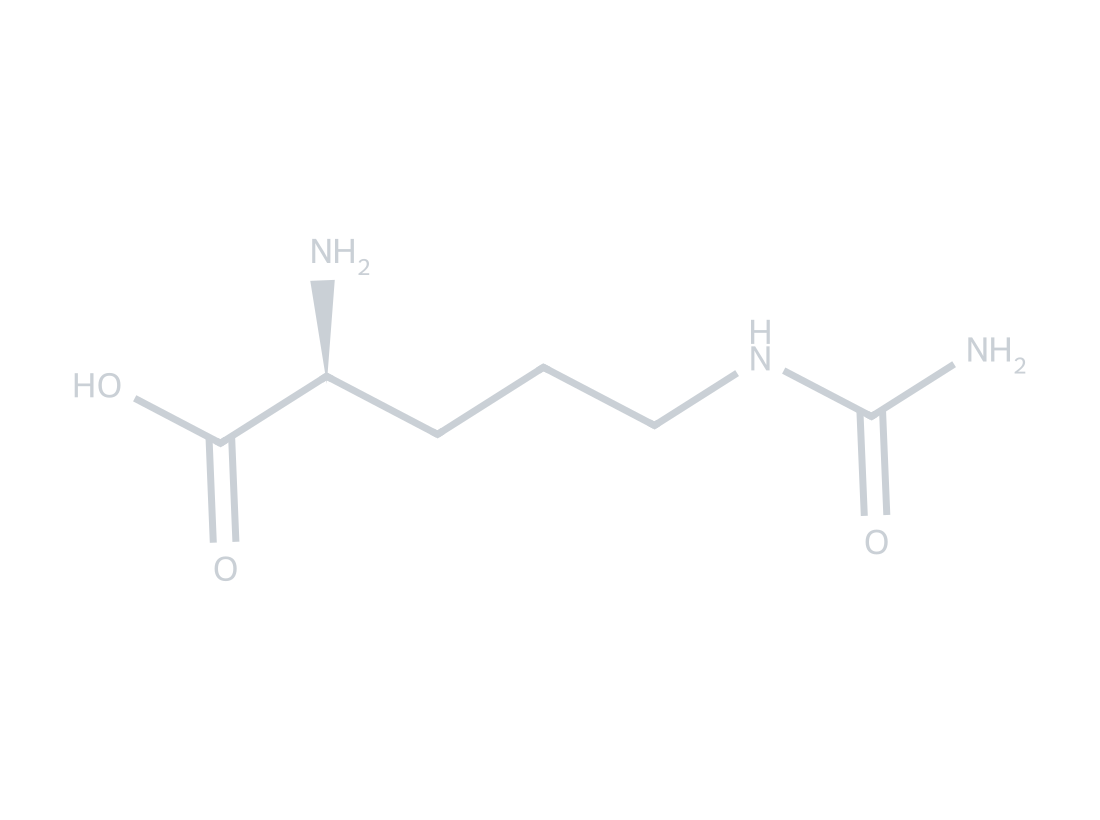
Mitochondrial carbamyl phosphate and citrulline synthesis at high matrix acetylglutamate.

The Journal of biological chemistry1982Cohen NS, Cheung CW, Kyan FS, et al.
Study designOther primary literature
SubjectAnimal

Abstract

Matrix acetylglutamate of uncoupled rat liver mitochondria increased about 10-fold, to 4.3 nmol/microliters, upon incubation with 5 mM concentrations of that compound. Uncoupled mitochondria incubated with the reagents needed for carbamyl phosphate and citrulline synthesis and 5 mM acetylglutamate synthesized citrulline at velocities which reached 99 nmol/min/mg of protein; simultaneously, as much as 47 nmol/min/mg of carbamyl phosphate accumulated and was distributed between matrix and medium. Maximal total carbamyl phosphate synthesis was, therefore, 146 nmol/min/mg, similar to the activity measured in liver homogenates. Without added acetylglutamate, some carbamyl phosphate accumulated when citrulline synthesis was about 40 nmol/min/mg. The finding that ornithine transcarbamylase can be limiting for citrulline synthesis shows that the activity of this enzyme is greatly restricted in mitochondria. The stimulation by ornithine of mitochondrial carbamyl phosphate synthesis was prevented when ornithine transcarbamylase was inhibited more than 96% by 5 mM delta-N-phosphonacetyl-L-ornithine, suggesting that the normal stimulatory effect of ornithine on carbamyl phosphate synthetase occurs via ornithine transcarbamylase. Lower concentrations of delta-N-phosphonacetyl-L-ornithine were required to achieve a given inhibition of citrulline synthesis from added carbamyl phosphate from endogenously synthesized carbamyl phosphate. The results reported suggest the existence of interactions between carbamyl phosphate synthetase and ornithine transcarbamylase in the matrix.

MeSH

Adenosine TriphosphateAnimalsBiological TransportCarbamatesCarbamyl PhosphateCitrullineGlutamatesKineticsMaleMitochondria, LiverOrnithineOrnithine CarbamoyltransferaseRatsRats, Inbred Strains

DOI 10.1016/s0021-9258(18)34514-9

PMID 7085611

View source →