ZERO WORLD RESEARCHLiterature database on amino acids & organic acids

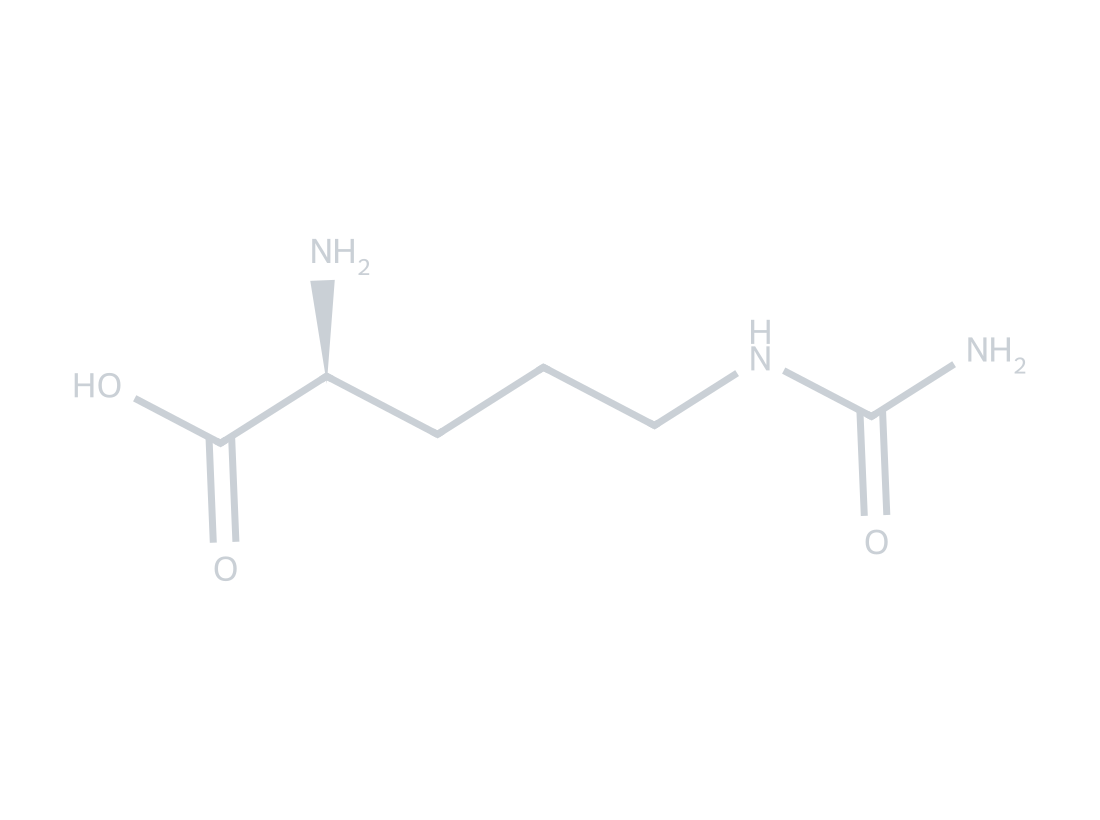
Dietary L-citrulline influences body temperature and inflammatory responses during nitric oxide synthase inhibition and endotoxin challenge in chickens.

Stress (Amsterdam, Netherlands)2022Uyanga VA, Zhao J, Wang X, et al.
Study designOther primary literature
SubjectAnimal

Abstract

Recent studies have revealed the role of L-citrulline (L-CIT) in thermoregulation, but very little is known about the mechanisms involved. In this study, nitric oxide synthase inhibition and endotoxin-induced fever were used to investigate the effects of L-CIT on body temperature and inflammatory responses. In experiment 1, NW-nitro-L-arginine methyl ester (L-NAME, 150 mg/kg BW), was i. p. injected into chicks fed with basal (CON) or L-CIT diets for 14 days. In experiment 2, Lipopolysaccharide (LPS, 2 mg/kg BW) was i. p. injected following 21d feeding with CON or L-CIT diets. In experiment 3, chickens were injected with either L-NAME, LPS, or L-NAME + LPS following 26 days feeding with CON or L-CIT diets. The rectal (RT), ear (ET), and core body temperature (CBT) of chickens were examined. Results showed that L-NAME effectively decreased the RT, ET, CBT, and plasma NO concentration. In contrast, LPS increased NO levels and initiated hyperthermia by increasing RT, ET, CBT, and PGE2 levels. L-CIT diet reduced the mean CBT in experiment 1 and diminished the NO level, PGE2 level, and mean RT in experiment 3. Co-administration of L-CIT + LPS upregulated IL-6 expression, whereas, LPS injection alone induced IL-10, IL-1β, and TLR4 gene expressions. Therefore, this study reveals that L-CIT-induced hypothermia was related to NO inhibition and a decrease in PGE2 concentration. Conversely, LPS induced hyperthermia was associated with an increase in both NO and PGE2 concentrations.

MeSH

AnimalsBody TemperatureChickensCitrullineDietEndotoxinsEnzyme InhibitorsLipopolysaccharidesNG-Nitroarginine Methyl EsterNitric OxideNitric Oxide SynthaseStress, Psychological

DOI 10.1080/10253890.2021.2023495

PMID 34962227

View source →