ZERO WORLD RESEARCHLiterature database on amino acids & organic acids

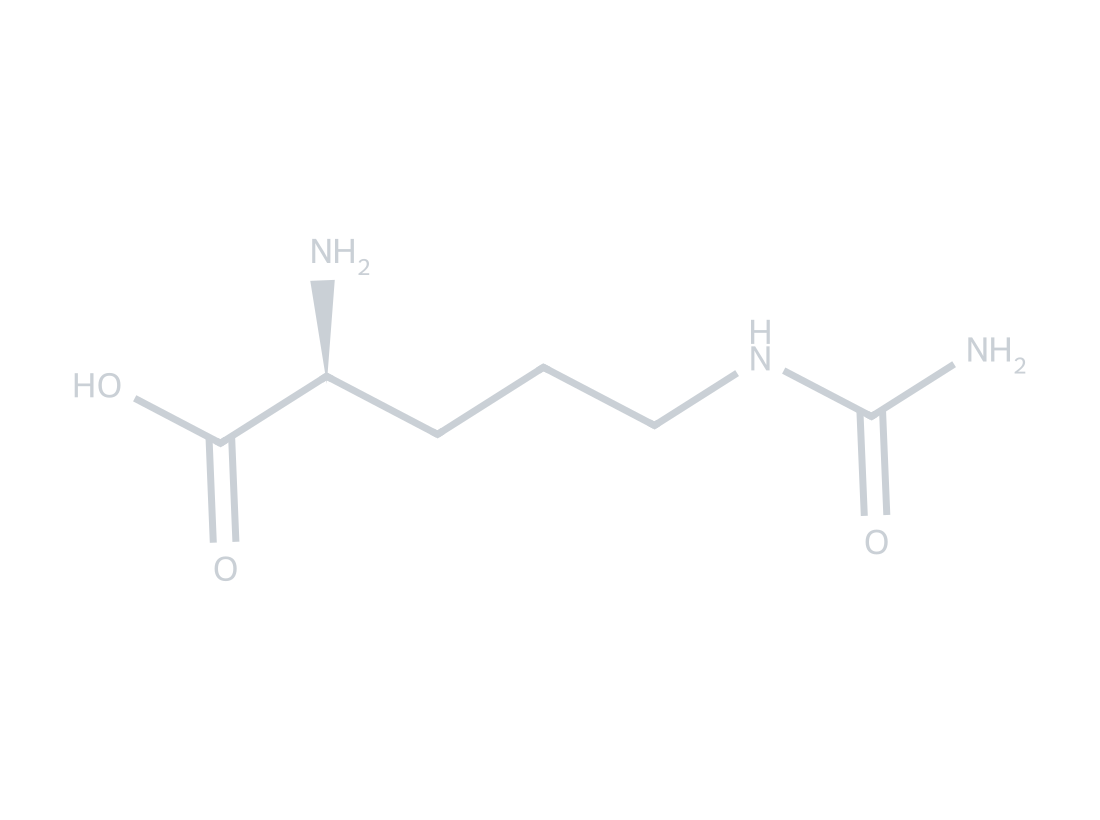
The effect of quercetin and citrulline on cycling time trial performance.

Journal of the International Society of Sports Nutrition2024Kurtz JA, Grazer J, Wilson K, et al.
Study designRandomized controlled trial
SubjectHuman

Abstract

Background: There is growing interest in the use of nutrition and dietary supplements to optimize training and time-trial (TT) performance in cyclists. Separately, quercetin (QCT) and citrulline (CIT) have been used as ergogenic aids to improve oxygen (VO2) kinetics, perceived effort, and cycling TT performance. However, whether the combination of QCT and CIT can provide additive benefits and further enhance cycling performance production is currently unknown.Methods: We examined 28-days of QCT + CIT supplementation on TT performance and several performance measures (i.e. mean power, VO2, respiratory exchange ratio (RER), and rate of perceived exertion (RPE)). Forty-eight highly trained cyclists were assigned to one of four supplementation groups: (1) QCT + CIT (QCT: 500 mg, CIT: 3000 g), (2) QCT (500 mg), (3) CIT (3000 mg), or (4) placebo (3500 mg of a zero-calorie flavored crystal light package). Supplements were consumed two times per day for 28 consecutive days. Participants performed a 20-km cycling time-trial race, pre- and post-supplementation to determine the impact of the combined effects of QCT + CIT.Results: There were no potential benefits of QCT +CIT supplementation on TT performance and several performance measures. However, there was an improvement in VO2 from pre-to-post-supplementation in QCT (p  = 0.05) and CIT (p  = 0.04) groups, but not in the QCT+CIT and PL groups.Conclusions: QCT + CIT does not seem beneficial for 20-km TT performance; further exploration with a focus on an increase in cycling duration or QCT+CIT combined with additional polyphenols may amplify any perceived bioactive or metabolic effects on cycling performance. The efficacy of QCT + CIT supplementation to improve cycling performance remains ambiguous.

MeSH

AdultAthletic PerformanceBicyclingCitrullineDietary SupplementsDouble-Blind MethodHumansMaleOxygen ConsumptionPerformance-Enhancing SubstancesQuercetinSports Nutritional Physiological PhenomenaYoung Adult

DOI 10.1080/15502783.2024.2416909

PMID 39417670

View source →