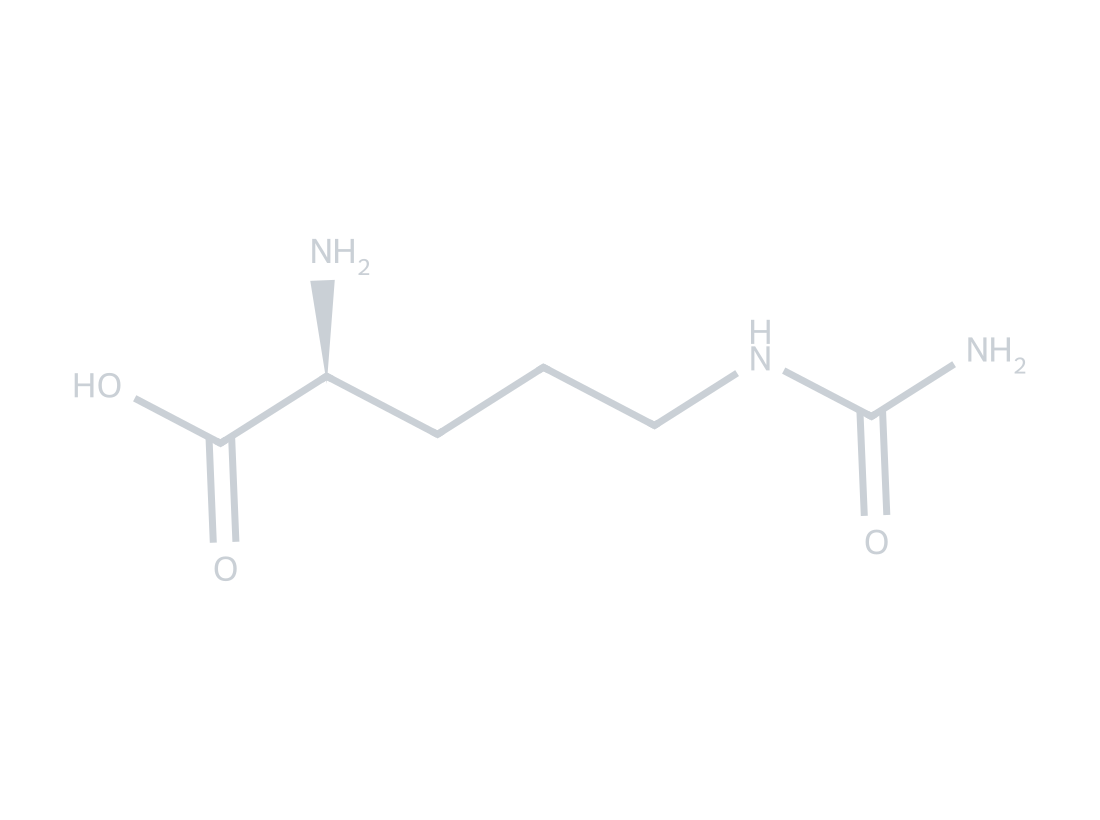
Diaphragm-specific effects of L-citrulline in mdx mice highlight its potential as adjuvant of standard therapy in Duchenne muscular dystrophy.
Abstract
Background and purpose: The absence of the protein dystrophin in Duchenne muscular dystrophy (DMD) leads to progressive muscle weakness, failing regeneration and deregulation of nitric oxide (NO) signalling. We focused on L-citrulline, a precursor of L-arginine, required for NO production in muscle, which is reduced in dystrophic mdx muscle.Experimental approach: L-Citrulline was administered (2 mg g-1 die-1), through diet, in comparison and/or in combination with prednisolone (1 mg kg-1, 5 days per week subcutaneously) to 4- to 5-week-old mdx mice for 8 weeks.Key results: L-Citrulline increased the levels of L-arginine, L-citrulline and L-ornithine in plasma and quadriceps of mdx mice. L-citrulline, alone or plus prednisolone, significantly improved maximal forelimb force in vivo, while ameliorating diaphragm movement amplitude and reducing diaphragm echodensity. In parallel, ex vivo, we detected a significant improvement of diaphragm force and contraction kinetics in mice treated with L-citrulline alone or in combination with prednisolone. L-citrulline also restored the expression of genes involved in Ca2+ handling during contraction (RyR1, RyR3 and SERCA), while reducing the markers of inflammation and fibrosis (CD68 and TGFβ1) and ameliorating mitochondrial biogenesis-associated genes (PGC1-α and MEF2C). No effect was observed on S-nitrosylation levels of HDAC2 and on diaphragm and gastrocnemius nNOS gene expression, suggesting a NO-independent mechanism underlying the positive outcome observed.Conclusions: Our results revealed the ability of L-citrulline supplementation to ameliorate in vivo and ex vivo function of diaphragm muscle, highlighting novel metabolic and calcium-related mechanisms of potential clinical interest.
MeSH
DOI 10.1111/bph.70437
PMID 42019979
View source →