ZERO WORLD RESEARCHアミノ酸・有機酸の学術文献データベース

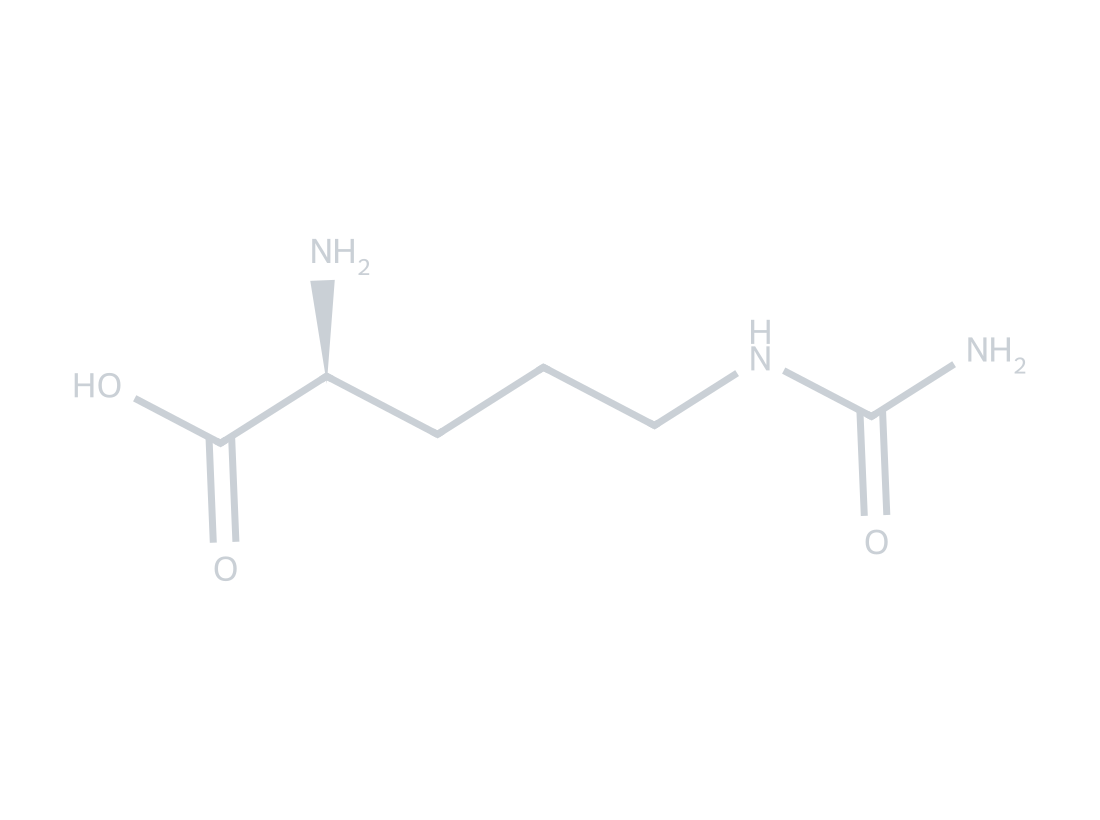
L-citrulline production from L-arginine by macrophage nitric oxide synthase. The ureido oxygen derives from dioxygen.

The Journal of biological chemistry1990Kwon NS, Nathan CF, Gilker C, et al.
研究デザインその他の原著論文
対象動物

抄録

Previously proposed mechanisms for the production of L-citrulline from L-arginine by macrophage nitric oxide (NO.) synthase involve either hydrolysis of arginine or hydration of an intermediate and thus predict incorporation of water oxygen into L-citrulline. Macrophage NO. synthase was incubated with L-arginine, NADPH, tetrahydrobiopterin, FAD, and dithiothreitol in H2(18)/16O2. L-Citrulline produced in this reaction was analyzed with gas chromatography/mass spectrometry. Its mass spectrum matched that of L-citrulline generated in H2(16)O/16O2. The base fragment ion of m/z 99 was shown to contain the ureido carbonyl group by using L-[guanidino-13C]arginine as substrate. When the enzyme reaction was performed in H2(16)O/18O2, the base fragment ion shifted to m/z 101 with L-[guanidino-12C]arginine as the substrate and to m/z 102 with L-[guanidino-13C]arginine. These results indicate that the ureido oxygen of the L-citrulline product of macrophage NO.synthase derives from dioxygen and not from water.

MeSH

Amino Acid OxidoreductasesAnimalsArginineCell LineCitrullineCytosolGas Chromatography-Mass SpectrometryInterferon-gammaLipopolysaccharidesMacrophagesMass SpectrometryNitric Oxide SynthaseOxygenOxygen Isotopes

DOI 10.1016/s0021-9258(18)77366-3

PMID 1696255

原文・出典を見る →