ZERO WORLD RESEARCHアミノ酸・有機酸の学術文献データベース

Impact of L-arginine and L-citrulline supplementation on macrophage responses to <i>Mycobacterium tuberculosis</i>.

Frontiers in immunology2026Bhargavi G, Shreeram S, Prioult G, et al.
研究デザインその他の原著論文
対象ヒト・動物 併記

抄録

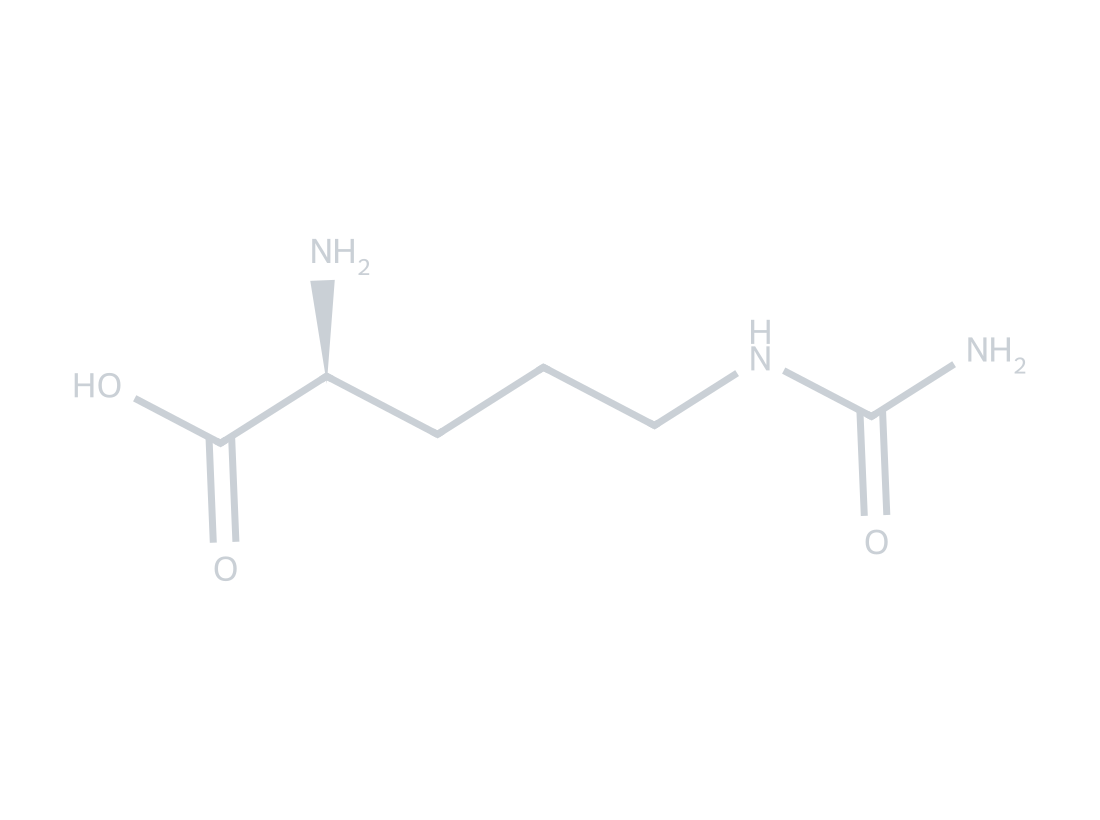
L-arginine (ARG) availability is a critical determinant of macrophage antimicrobial capacity, as it fuels nitric oxide production and other immune effector pathways essential for restricting Mycobacterium tuberculosis (Mtb), the causative agent of tuberculosis (TB). L-citrulline (CIT), a precursor in the ARG regeneration cycle, can replenish intracellular ARG pools when transport is limited. However, the comparative and combined effects of exogenous ARG and/or CIT on intracellular Mtb control across macrophage lineages and activation states remain insufficiently defined. This study investigated how supplementation with ARG, CIT or their combination influences Mtb survival in human and murine, primary macrophages and cell line, both in naïve and IFNγ-activated states, and evaluated whether these amino acids can enhance the activity of anti-TB drugs, isoniazid (INH) and rifampicin (RIF). Across a 5-day infection course, both ARG and CIT significantly reduced intracellular Mtb loads relative to untreated cells, with high-dose supplementation eliciting earlier and more sustained inhibition. These effects were amplified in IFNγ-stimulated macrophages, accelerating Mtb control and minimizing dose-dependent differences. Combination of ARG plus CIT at intermediate doses produced additive benefits, most notably in murine macrophages where single-agent effects were limited. Co-supplementation with ARG or CIT improved early antimicrobial effects of INH and RIF in all macrophage types, particularly under IFNγ stimulation. Gene expression analyses revealed coordinated metabolic and inflammatory reprogramming. For example, TNF expression was reduced by amino acid supplementation, while IL6 expression was increased, and NOS2 was significantly upregulated by ARG in IFNγ-stimulated cells, and ARG1 expression was broadly suppressed in these cells. These findings demonstrate that ARG and CIT reshape macrophage antimicrobial response in a complementary manner, augmenting innate and drug-enhanced control of Mtb. The results support metabolic supplementation with ARG and CIT as a promising host-directed therapeutic approach to improve macrophage-mediated restriction of Mtb infection.

MeSH

AnimalsAntitubercular AgentsArginineCitrullineHumansInterferon-gammaIsoniazidMacrophage ActivationMacrophagesMiceMycobacterium tuberculosisRifampinTuberculosis

DOI 10.3389/fimmu.2026.1810985

PMID 42164505

原文・出典を見る →